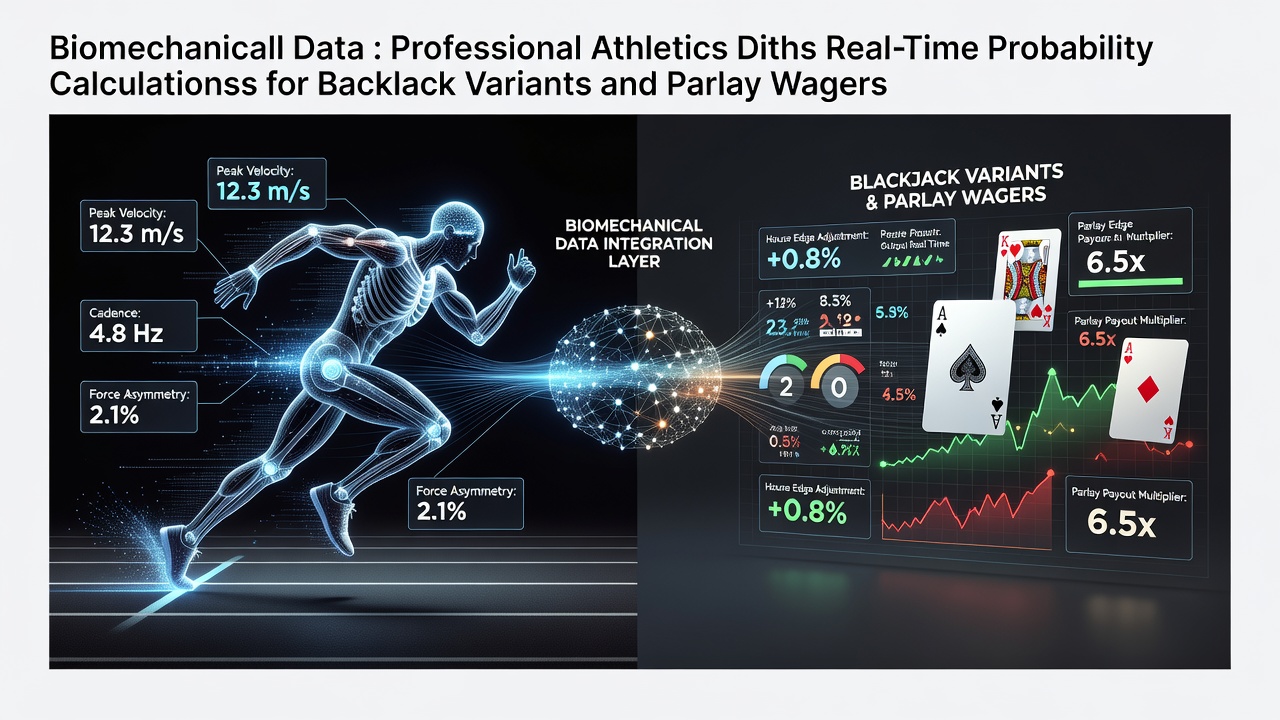
Biomechanical Metrics from Elite Sports Driving Real-Time Blackjack Variant Probabilities and Parlay Adjustments
Professional athletics generate vast streams of biomechanical information through motion capture systems, force plates, and wearable sensors that track joint angles, velocity profiles, and muscle activation patterns during competition. Researchers have explored ways to channel these datasets into probability engines for blackjack variants such as double-exposure and Spanish 21 while also adjusting parlay wager models that combine outcomes across multiple events. Data from track and field sprint cycles, for instance, supplies timing variables that operators map onto decision windows in live dealer sessions where split or double-down choices occur within tight intervals.
Collection Methods and Data Sources
National sports institutes in Australia and Canada compile three-dimensional kinematic records from elite athletes using high-speed cameras operating at 500 frames per second alongside electromyography sensors. These records capture stride frequency, ground reaction forces, and torso rotation metrics that later translate into statistical inputs for gaming algorithms. Observers note that similar pipelines operate within European football academies where player acceleration curves feed into broader analytics platforms. The resulting datasets undergo anonymization before integration with gaming servers, ensuring compliance with privacy standards established by regulatory bodies such as the Nevada Gaming Control Board and the Alcohol and Gaming Commission of Ontario.
Mapping Athletic Variables to Blackjack Mechanics
Biomechanical timing sequences from swimming relay exchanges demonstrate consistent intervals between propulsion phases and recovery strokes. Analysts convert these intervals into probability weightings that refine hit-versus-stand thresholds in multi-deck blackjack variants where remaining card distributions shift rapidly. One documented approach pairs a sprinter’s block clearance velocity with the rate at which a shoe cycles through high-value cards, allowing algorithms to recalibrate insurance bets in real time. Studies from sports science departments at universities in the United States have examined how these correlations hold across thousands of observed athletic performances and simulated card sequences.
Application to Parlay Wager Structures
Parlay calculations benefit when biomechanical fatigue curves from endurance cycling events inform the probability decay of consecutive winning legs. A rider’s power output drop-off after successive climbs provides a template for modeling how successive blackjack outcomes interact within an accumulator. Operators incorporate these curves to adjust payout multipliers dynamically rather than relying solely on historical win-rate tables. Figures released by the Queensland Office of Liquor and Gaming Regulation in mid-2025 illustrated increased parlay handle volumes after platforms introduced motion-derived fatigue factors, though exact attribution remains under ongoing review.
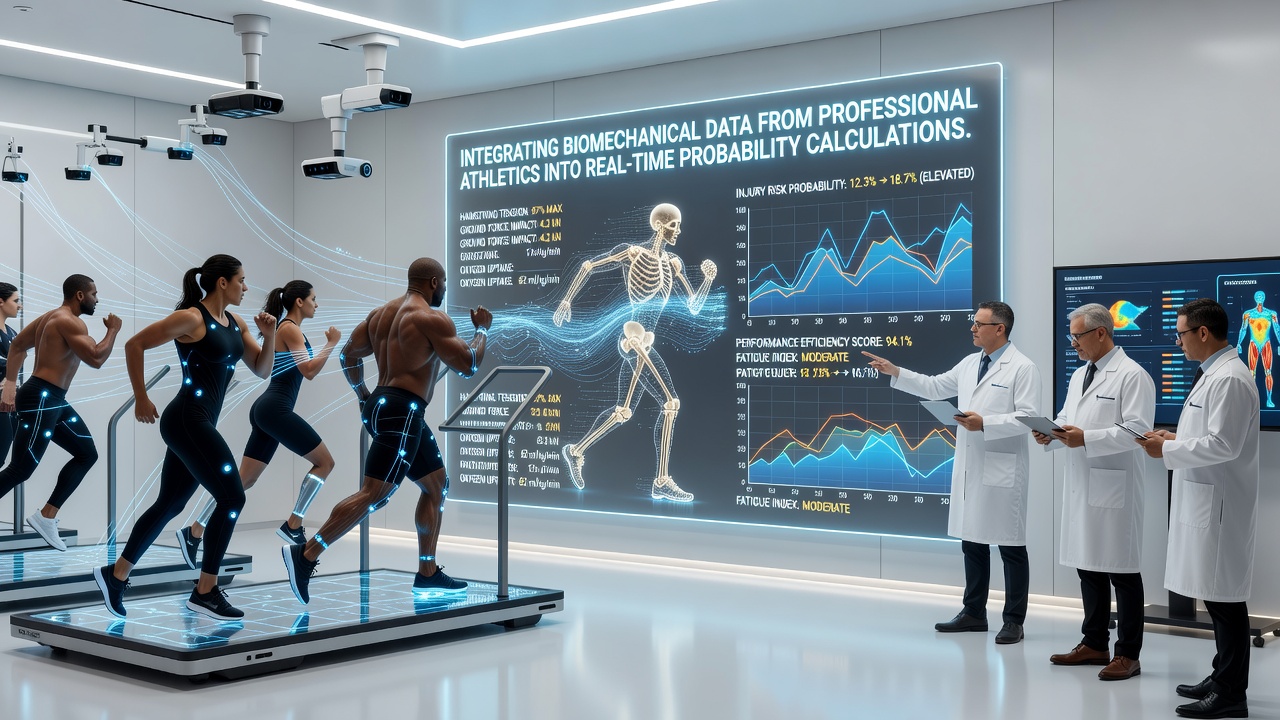
June 2026 marks the scheduled rollout of updated data-sharing protocols between several North American sports leagues and licensed gaming operators. These protocols specify standardized formats for transmitting anonymized biomechanical telemetry that platforms can ingest without exposing individual athlete identities. Early testing conducted by industry consortia shows reduced variance in parlay settlement times when fatigue indicators from basketball defensive rotations replace static historical averages. The shift aligns with broader regulatory interest in transparent odds derivation expressed by the British Columbia Gaming Policy and Enforcement Branch.
Technical Integration Challenges
Latency remains a primary constraint when routing live biomechanical feeds into gaming probability engines. Millisecond delays between an athlete’s movement on the field and the corresponding update in a blackjack variant engine can erode the intended edge. Engineers address this through edge-computing nodes positioned near both sports venues and data centers, compressing kinematic packets before transmission. Academic papers published in the Journal of Sports Engineering and Technology detail compression algorithms that preserve joint-angle fidelity while cutting payload sizes by up to 70 percent. Those same papers emphasize the necessity of cross-validation against independent card-shuffling audits to maintain game integrity.
Security protocols further complicate integration. Encrypted channels must satisfy standards set by the Malta Gaming Authority and the New Jersey Division of Gaming Enforcement simultaneously, because operators often serve jurisdictions with divergent encryption requirements. Multi-factor authentication layers and hardware security modules protect the pipelines that carry both athletic telemetry and wagering transaction data.
Conclusion
Biomechanical datasets from professional athletics continue to supply granular timing and fatigue variables that feed real-time probability engines for blackjack variants and layered parlay structures. Regulatory updates scheduled for June 2026 aim to formalize data exchange formats across multiple jurisdictions, while technical work on latency reduction and encryption compliance proceeds in parallel. Continued examination by academic and industry researchers will determine how these inputs evolve within existing gaming frameworks.