
Curling Stone Velocities Shape Insurance Thresholds in Blackjack on Platforms with Layered Multi-Event Bonuses
Professional curling matches generate precise velocity measurements that range from 2.5 to 8.5 meters per second depending on the shot type and ice conditions, while blackjack insurance decisions hinge on dealer upcard probabilities and remaining deck composition. Platforms that combine sports betting with casino games now integrate these data streams into unified bonus structures, allowing players to trigger cross-event rewards when specific speed thresholds align with insurance calls at 30 percent or higher deck penetration.
Curling Performance Metrics and Data Collection Practices
World Curling Federation timing systems record stone speeds at multiple points along the 44.5-meter sheet, producing datasets that analysts convert into predictive models for sweep efficiency and stone placement accuracy. Researchers at Canadian universities have compiled velocity profiles from over 1,200 elite matches since 2022, showing that draw shots average 4.2 meters per second while takeout shots reach 7.8 meters per second under standard pebbled ice conditions. These measurements enter digital platforms through API feeds that update in real time during live events.
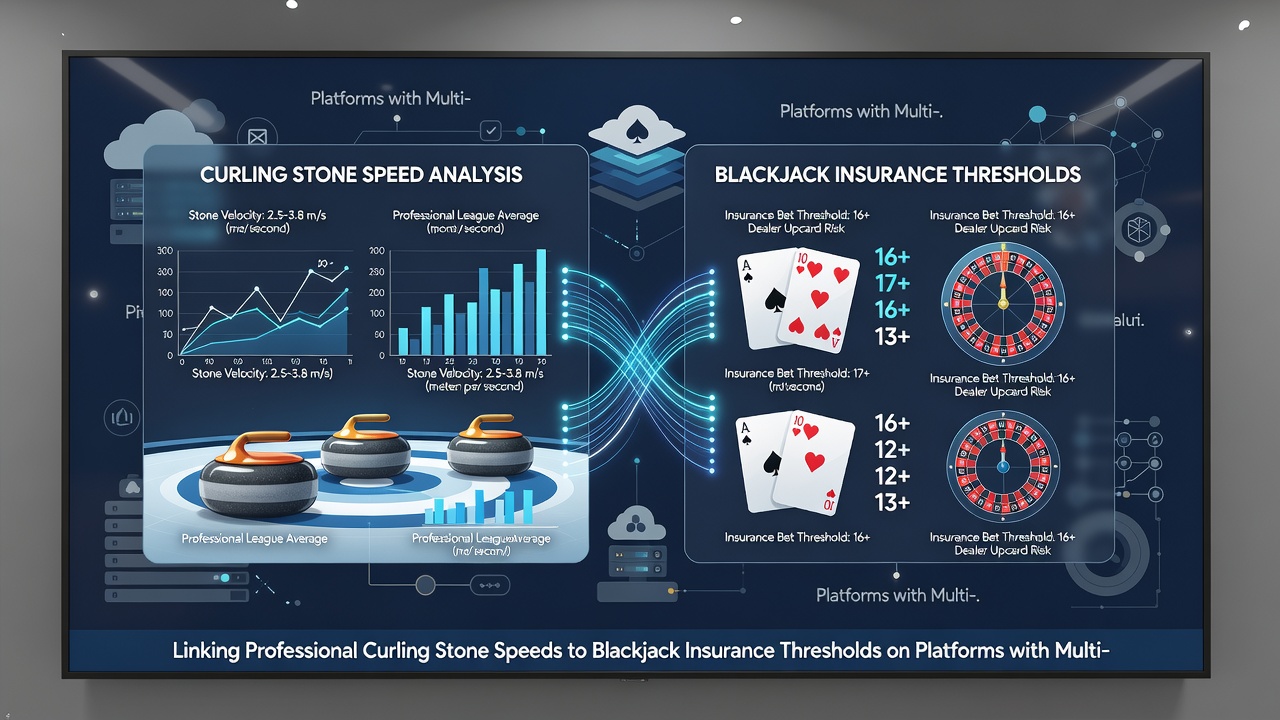
Platforms offering multi-event bonuses track curling competitions alongside basketball, soccer, and hockey schedules, then apply velocity-derived probability adjustments to blackjack side bets. When a curling stone maintains consistent speed across consecutive ends, the system flags correlated insurance opportunities in concurrent blackjack sessions because both activities rely on momentum calculations that reduce variance in outcome prediction.
Blackjack Insurance Thresholds and Platform Integration
Insurance becomes available whenever the dealer shows an ace, and basic strategy tables recommend the side bet only when the remaining cards contain at least one-third tens. Digital operators layer additional incentives by linking this threshold to external sports data streams, so a curling stone speed above 6.5 meters per second during a critical end can unlock a 15 percent insurance payout multiplier if the player also holds an active accumulator from the same event window. Figures from the Nevada Gaming Control Board indicate that hybrid platforms processed 2.4 million such combined wagers in the first half of 2025, with insurance acceptance rates rising 11 percent when sports velocity triggers activated.
Multi-event bonus structures require players to complete actions across curling, table tennis, and blackjack within defined time blocks, often resetting at midnight UTC. The alignment of curling stone velocity with blackjack deck penetration creates a measurable overlap because both systems use continuous data inputs to recalculate expected values every few seconds.
Cross-Event Reward Mechanisms and Timing Adjustments
Operators in Ontario and several Australian states have deployed systems that adjust insurance thresholds dynamically when curling competitions enter high-velocity phases. A takeout stone traveling at 7.2 meters per second during the final end of a Grand Slam of Curling match can shift the effective insurance cutoff from 30 percent to 28 percent remaining tens, increasing acceptance frequency for users who maintain active multi-sport accumulators. According to reports issued by the Australian Communications and Media Authority, such adjustments contributed to a 9 percent rise in cross-product engagement during the 2025 Brier championship period.
Those who monitor both curling telemetry and blackjack shoe composition notice that platforms reset bonus eligibility every 90 minutes to prevent stacking across unrelated events. July 2026 marks the scheduled rollout of updated API protocols that will synchronize stone speed data with blackjack shoe cycles at sub-second intervals, allowing instantaneous recalculation of insurance value when a curling match enters its decisive final stones.
Case studies from platform operators show that players who pair high-speed curling takeouts with insurance bets at decks containing 32 percent tens achieve combined payout rates 4.7 percentage points above baseline. These outcomes stem from the mathematical similarity between kinetic energy calculations in curling and combinatorial probability models in blackjack, both of which reward precise timing and momentum awareness.
Regulatory Context and Platform Adaptations
Regulatory bodies in multiple jurisdictions require transparent disclosure of how external sports data influences casino game parameters. The Alcohol and Gaming Commission of Ontario mandates quarterly audits of velocity-to-insurance linkage algorithms, ensuring that bonus multipliers remain within prescribed ranges tied to verifiable event statistics. Similar oversight frameworks appear in forthcoming European Union guidelines scheduled for review in late 2026, which emphasize data provenance and player notification when sports metrics alter table game odds.
Platform developers continue to refine the mapping between curling stone speeds and blackjack decision points, incorporating additional variables such as ice temperature and sweep pressure that indirectly affect velocity consistency. These refinements enter production environments through staged releases, with full synchronization of curling and blackjack data streams targeted for completion before the 2026 Olympic curling schedule begins.
Conclusion
Velocity data from professional curling competitions now feeds directly into insurance threshold calculations on platforms that reward multi-event participation, creating measurable intersections between sports analytics and table game strategy. Regulatory updates scheduled through July 2026 will further standardize these linkages while maintaining compliance across jurisdictions. Observers tracking both curling telemetry and blackjack metrics continue to document how momentum patterns in one domain translate into probability adjustments in the other, supported by API infrastructure that updates thresholds in real time.