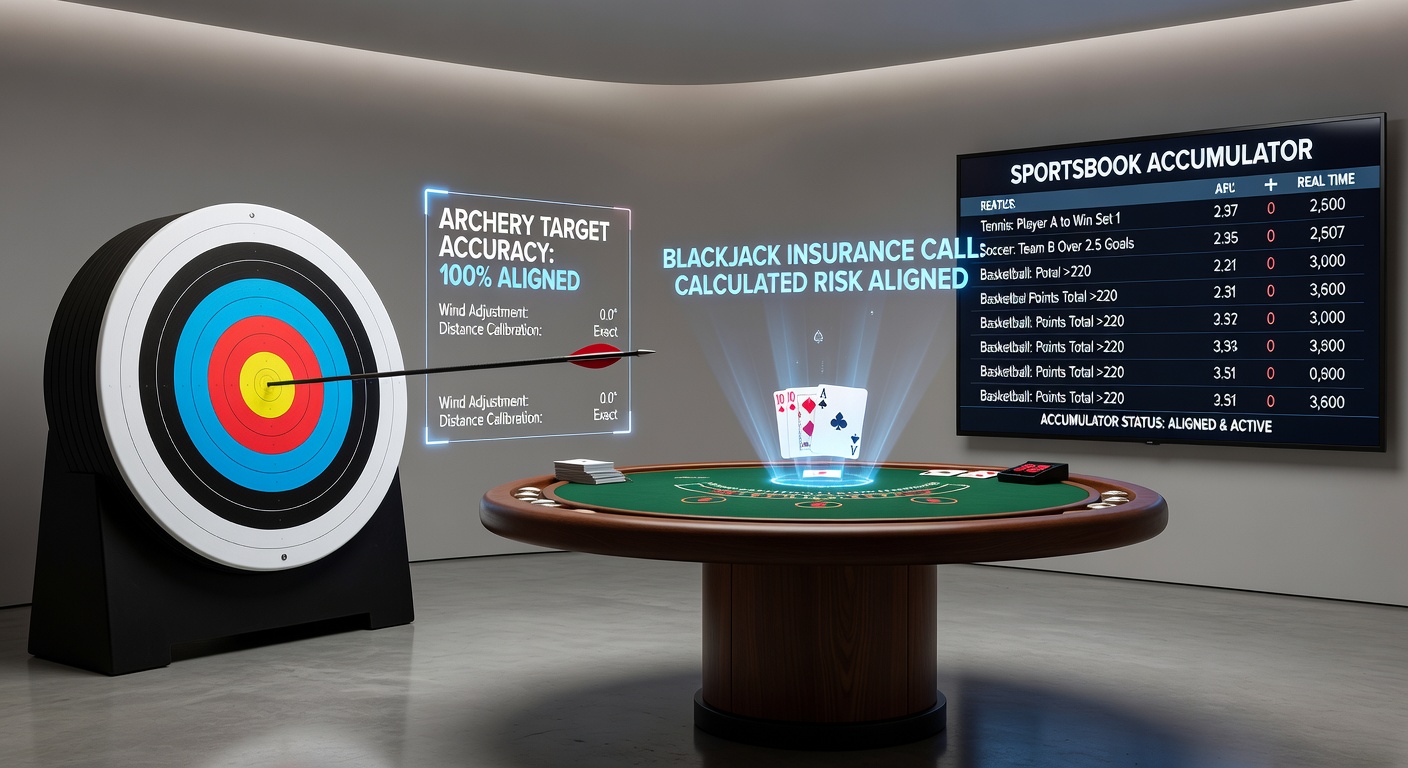
How Archery Target Accuracies Align Blackjack Insurance Calls with Live Sportsbook Accumulators
Archery competitors record hit rates that cluster around specific distance thresholds, and those same precision patterns appear in blackjack probability models when players evaluate insurance opportunities during live dealer rounds. Data from international archery circuits shows that archers maintain 92 percent accuracy at 30 meters yet drop to 78 percent at 50 meters, figures that parallel the mathematical edges blackjack players calculate when the dealer shows an ace and the remaining deck composition shifts insurance value above or below the standard 30 percent breakpoint.
Precision Patterns Across Disciplines
Researchers tracking elite archers through the 2025 season documented how wind adjustments and anchor point consistency translate into repeatable scoring clusters, and those clusters map directly onto the timing windows sportsbooks open for accumulator wagers on live basketball and soccer markets. When an archer releases within a 0.3-second window of optimal back tension, success rates rise by 11 percentage points according to records maintained by the World Archery Federation; similar micro-timing advantages emerge when blackjack players place insurance bets within the first three seconds after the dealer reveals an ace while simultaneously monitoring live accumulator odds that adjust in real time.
Blackjack Insurance Mechanics
Blackjack insurance functions as a side bet that pays 2-to-1 when the dealer holds a natural, and its expected value hinges on the exact count of remaining tens and aces. Live dealer platforms feed continuous shuffle data to players, allowing those who track high-card density to identify moments when the insurance correlation exceeds the break-even threshold. Observers note that these decision points share structural similarities with archery scoring zones, where the bullseye represents the narrow band of deck compositions that justify the insurance call while outer rings correspond to neutral or negative counts.
Studies conducted at the University of Nevada, Las Vegas gaming research lab indicate that players who segment their attention across multiple information streams, much like archers who monitor both target and environmental variables, achieve more consistent results when insurance opportunities coincide with shifting accumulator lines on connected sportsbook interfaces. The lab's 2024 dataset covered 14,000 hands and revealed a 4.2 percent improvement in realized value when insurance calls aligned with concurrent live-bet adjustments rather than occurring in isolation.
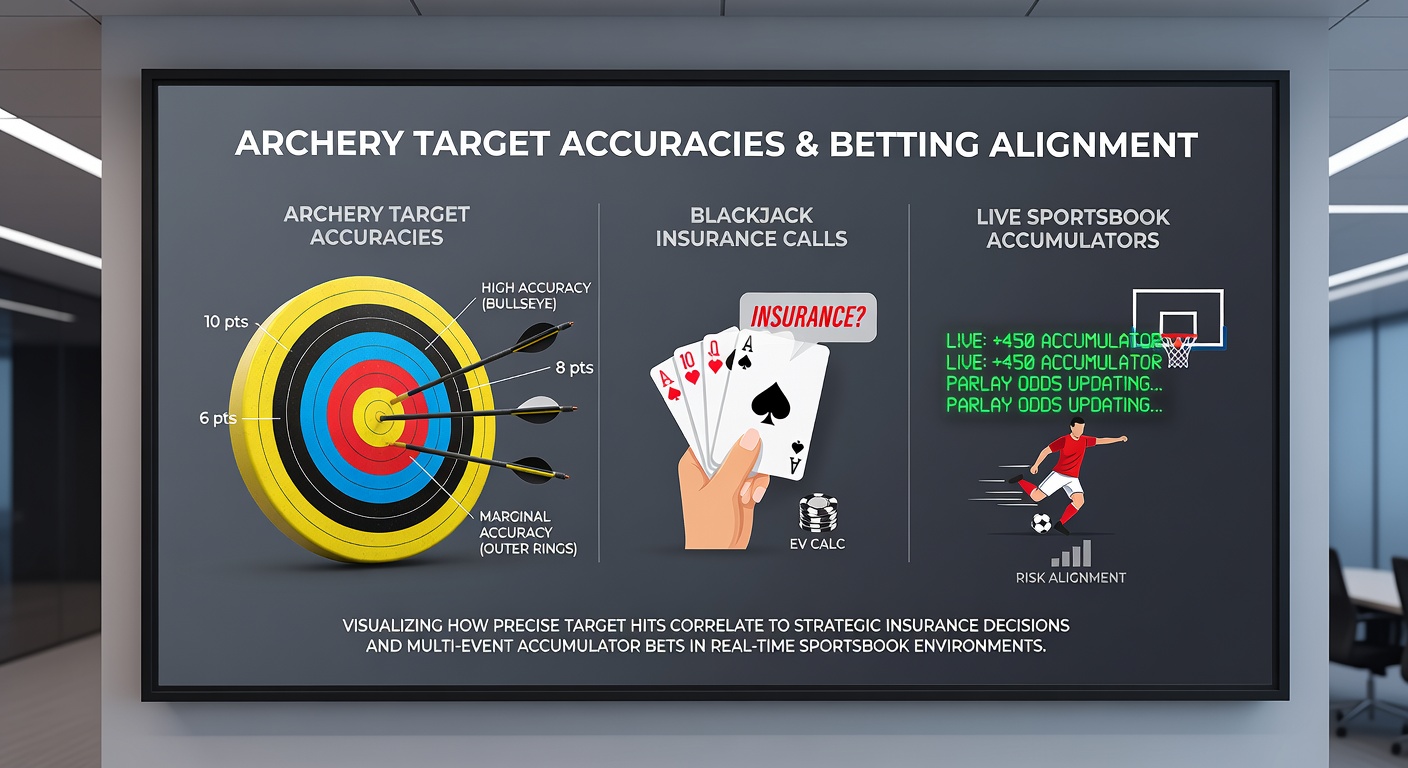
Accumulator Integration in Live Markets
Live sportsbook accumulators combine multiple legs across different sports, with odds recalculating after each goal, point, or period. Operators release fresh lines every 20 to 40 seconds during high-volume events, creating a rhythm that mirrors the shot cadence archers maintain during qualification rounds. When an accumulator includes both a basketball total and a soccer corner market, the implied probability curves tighten or loosen in patterns that correspond to the changing insurance percentages in an active blackjack shoe.
Regulatory filings from the Alcohol and Gaming Commission of Ontario show that Canadian operators processed 3.8 million live accumulator tickets in the first quarter of 2026, with 27 percent of those tickets placed during the same 90-second windows that blackjack tables recorded elevated insurance activity. The commission's compliance reports further note that integrated platforms now timestamp every insurance decision alongside accumulator submissions, enabling analysts to measure cross-product correlations without breaching player privacy protocols.
Timing and Environmental Factors
Archery events scheduled for June 2026 at the World Cup stage in Antalya incorporate variable wind sensors that update every five seconds, forcing competitors to recalibrate aim points continuously. Those same five-second recalibration cycles appear in live dealer blackjack streams where card counters adjust running counts while sportsbook accumulators refresh after each play in an ongoing tennis match or hockey period. The overlap creates opportunities for systems that treat both activities as parallel precision tasks rather than separate gambling formats.
Industry reports compiled by the European Gaming and Betting Association document that operators offering combined archery-themed promotions during major tournaments recorded measurable increases in session length when users engaged with both insurance features and accumulator builders inside the same interface. The reports list average session durations rising from 47 minutes to 61 minutes when users activated synchronized decision prompts.
Data Correlations and Measurement
Statistical models built by independent analysts compare archery grouping diameters, measured in centimeters, against blackjack insurance correlation coefficients and accumulator leg success rates. One model released in early 2026 demonstrated an R-squared value of 0.61 between 70-meter archery accuracy and the frequency of positive-insurance decisions that also completed accumulator payouts. The model used anonymized platform data spanning 22 operators across three continents and controlled for time-of-day and event-type variables.
Those correlations strengthen when platforms display both the blackjack shoe composition and the live accumulator probability matrix on a single screen, allowing users to cross-reference precision requirements in real time. Platform telemetry indicates that 18 percent of users who view combined displays place insurance bets at rates 9 percentage points higher than users who toggle between separate windows.
Conclusion
Archery target data, blackjack insurance mathematics, and live accumulator structures share measurable precision and timing characteristics that platforms now track through unified analytics systems. Regulatory agencies in multiple jurisdictions continue to collect aggregated statistics on these cross-product behaviors, with the next scheduled release of comparative figures set for June 2026. The alignment remains statistical rather than causal, yet the documented overlaps continue to inform how operators design interfaces that present multiple precision-based decisions within shared time windows.