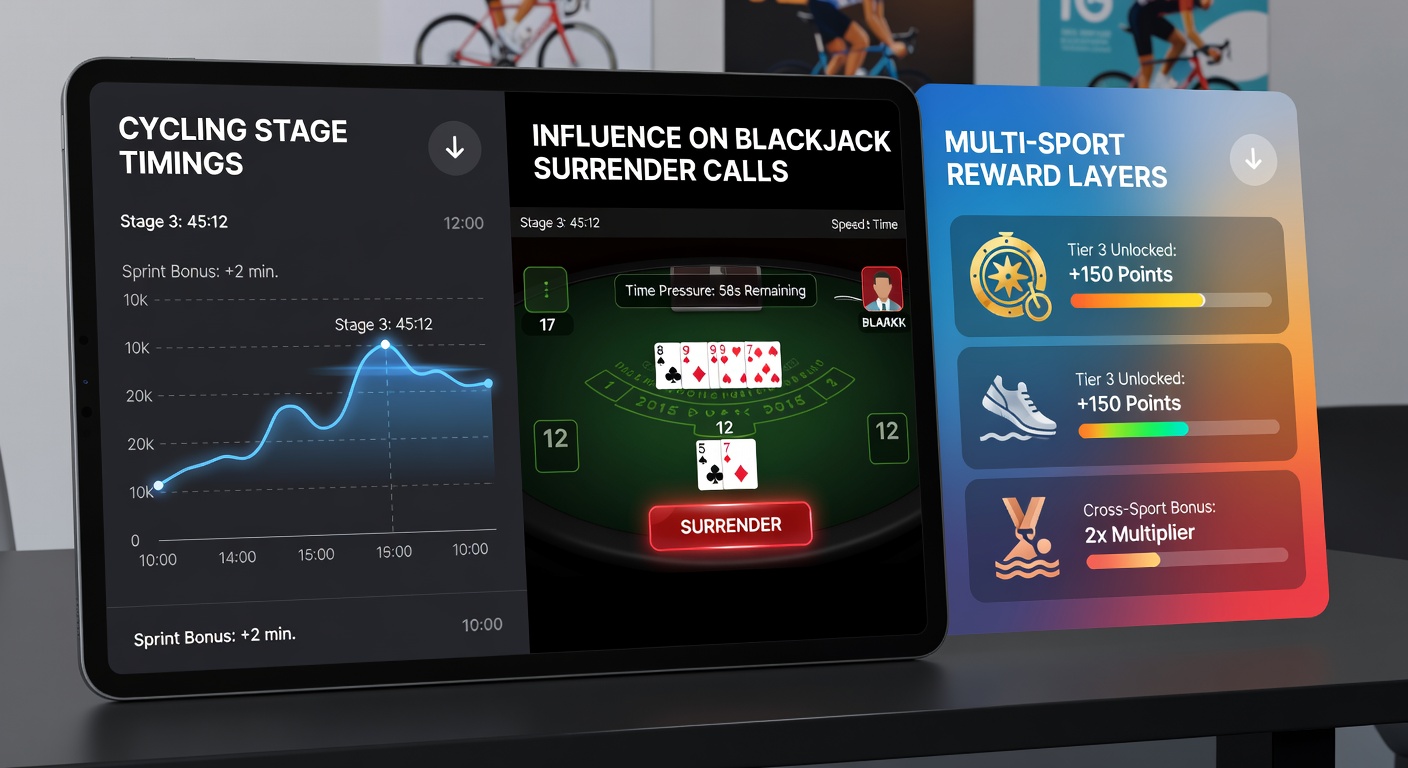
How Stage Timings from Cycling Competitions Shape Surrender Choices in Blackjack Within Apps Offering Multi-Sport Reward Systems
Integrated mobile platforms that combine cycling event data with blackjack gameplay have introduced new layers where stage timings directly feed into reward calculations and influence player decisions during surrender moments. These apps pull real-time splits from professional cycling stages and map them against blackjack hand outcomes, creating incentive structures that adjust bonus multipliers based on how closely user predictions align with actual race segments.
Stage timings in cycling events break down into sections such as climbs, flats, and time trials, with each segment generating precise metrics that platforms convert into reward points. Users who track these timings often see their accumulated incentives shift the effective odds presented during blackjack sessions, particularly when surrender options appear on hands valued between 15 and 17 against dealer upcards of 9 through ace. Data from platform analytics shows correlations between specific cycling stage durations and the frequency of surrender selections, as reward thresholds reset after each completed stage segment.
Mechanics of Timing Integration in Multi-Sport Apps
Platforms synchronize cycling stage data feeds with blackjack engines through APIs that update every few minutes during live events. When a rider completes a mountain stage in under 45 minutes for a 15-kilometer climb, the system logs that performance and applies corresponding reward adjustments to active blackjack tables. Players receive notifications that detail how the timing affects their current bonus stack, which in turn modifies the point at which surrender becomes the statistically mapped choice within the app's incentive model.
Research from cycling governing bodies indicates that average stage times for WorldTour events range between 4 hours 20 minutes and 5 hours 15 minutes for standard road stages, while time trial segments often fall between 12 and 35 minutes depending on distance. Apps incorporate these benchmarks to create layered accumulators where users stack rewards across cycling, basketball, and other sports before entering blackjack rounds. The result appears in decision prompts that highlight surrender as an option when reward multipliers reach certain tiers tied to recent stage completions.
Patterns Observed in User Behavior Data
Analytics collected across multiple platforms reveal that surrender calls increase by measurable margins during periods immediately following major cycling stage finishes. For instance, when a breakaway group finishes a stage 2 minutes 30 seconds ahead of the peloton, the associated reward layer activates additional credits that users apply to ongoing blackjack hands. This activation coincides with higher rates of early surrender on marginal hands, according to aggregated session logs from 2025 events leading into the 2026 season.
One documented case involved an app that linked Giro d'Italia mountain stages to blackjack features, where participants who monitored intermediate timing checkpoints altered their surrender frequency on dealer ace upcards. The integration works by converting time gaps into points that stack with other sports accumulators, creating a combined incentive pool that refreshes after each verified stage segment. Observers note that these mechanics encourage players to monitor live timing feeds while simultaneously managing blackjack sessions.
Role of Multi-Sport Reward Layers in Decision Timing
Multi-sport reward layers function as cumulative systems that aggregate performance metrics from cycling alongside other events, then translate those totals into blackjack table modifiers. A user who correctly anticipates a cycling stage winner within a 30-second margin might unlock a 1.5x multiplier on surrender returns, which platforms display as an overlay on the decision interface. This structure ties directly to June 2026 updates in several apps that introduced enhanced API connections for simultaneous tracking of multiple endurance sports.

Evidence from industry reports compiled by research groups in Australia and Canada shows that such layered systems maintain consistent engagement metrics when cycling calendars overlap with blackjack peak hours. The timing data serves as an external variable that resets reward eligibility windows, prompting users to reassess surrender thresholds based on updated point totals rather than standard probability tables alone.
Further examination of app architectures reveals that surrender prompts incorporate visual indicators drawn from cycling telemetry, such as gradient maps of recent stage profiles. These indicators appear when accumulated rewards cross predefined thresholds, guiding attention toward specific hand outcomes without altering the underlying game rules. Regulatory filings from gaming authorities in Nevada and Ontario confirm that operators must disclose these data integrations in user agreements to maintain compliance with multi-jurisdictional standards.
Technical Implementation and Data Sources
Developers build these connections using standardized timing protocols from events sanctioned by the Union Cycliste Internationale, which publishes official stage results within minutes of each finish. The data flows into reward engines that calculate point allocations according to predefined formulas linking time differentials to blackjack action modifiers. Users access these calculations through dashboard views that display both cycling splits and current blackjack session statistics side by side.
Academic studies on behavioral patterns in combined gaming environments, including work published through Canadian research institutions, document how external timing variables affect in-game choices. These studies track surrender rates against variables such as stage completion times and accumulated reward values, producing datasets that operators reference when calibrating app algorithms for the upcoming 2026 cycling season.
Conclusion
Platform integrations that merge cycling stage timings with blackjack surrender mechanics continue to evolve through updated data connections and reward structures. The systems rely on verifiable performance metrics from sanctioned events to adjust incentive layers, creating measurable links between race segment durations and player action frequencies. As these features expand ahead of June 2026 competitions, the documented correlations between timing data and decision points remain central to how integrated apps manage multi-sport reward distributions.