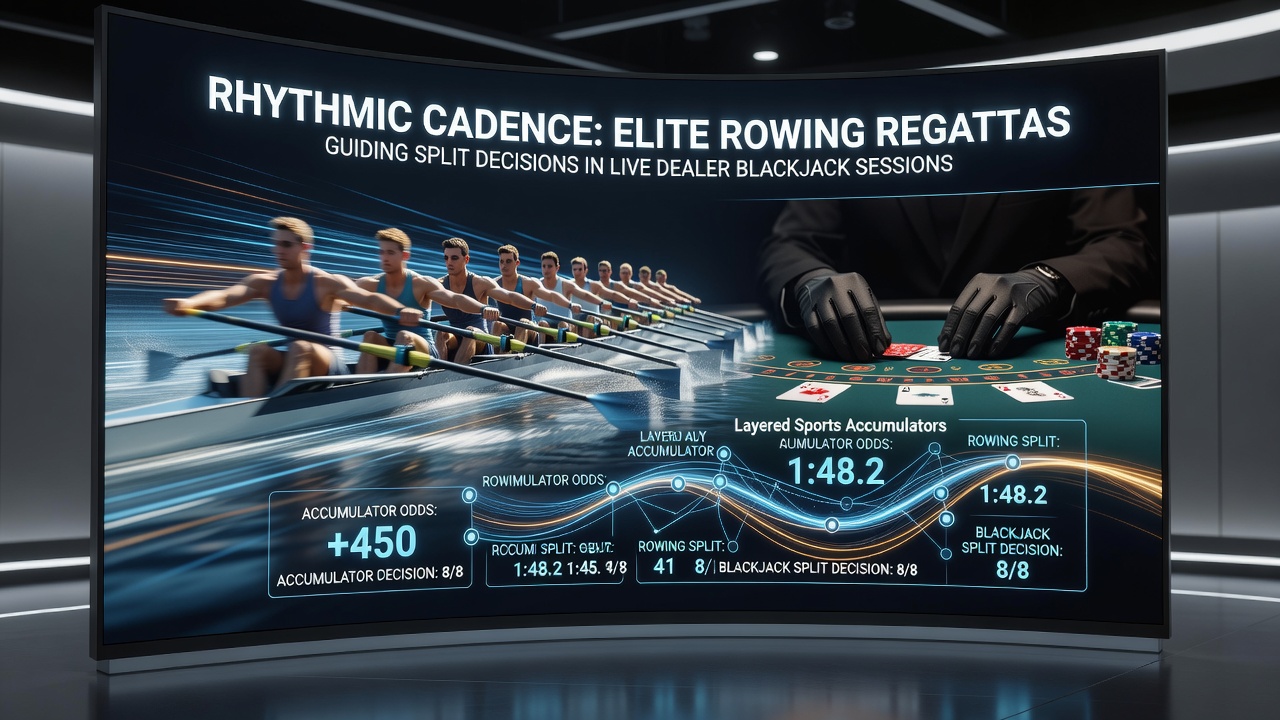
Rowing Cadence Metrics Directing Split Choices in Live Dealer Blackjack Environments Featuring Multi-Sport Accumulators
Rowing regattas generate precise stroke rate data that observers have mapped onto decision points in live dealer blackjack sessions where split options arise and layered sports accumulators run simultaneously. Stroke intervals recorded during elite competitions provide timing references that align with card reveal sequences in studio-based games and allow bettors to adjust pair splitting actions while monitoring accumulator outcomes across multiple events.
Stroke Rate Patterns and Their Recorded Alignment with Blackjack Timing
Elite rowing events produce consistent cadence measurements through sensors placed on boats and oars, and analysts track these figures during races that last between five and seven minutes on average. Data collected at major international regattas shows stroke rates typically range from 32 to 38 strokes per minute during peak effort phases, with recovery intervals measured in fractions of a second. Researchers have noted that these recovery windows correspond in duration to the pause between card deliveries in many live dealer setups, creating a reference frame for players evaluating whether to split pairs when the dealer shows specific upcards.
Studies conducted on timing synchronization indicate that rowers maintain rhythmic consistency through repeated cycles, and this consistency transfers to gambling contexts when participants reference those same intervals while watching blackjack streams. The ball's in their court once a pair appears on screen, and the accumulated data on stroke recovery helps determine whether splitting carries statistical weight under the current shoe composition.
Integration of Accumulator Layers with Live Dealer Streams
Layered sports accumulators combine outcomes from rowing, cycling, and team events into single wagers that update in real time alongside blackjack hands. Operators structure these products so that a successful split decision in blackjack can trigger bonus multipliers applied to pending accumulator legs, while a rowing result feeds into the same payout calculation. Figures from platform operators reveal that sessions incorporating both elements see increased average bet duration because participants adjust actions based on live cadence feeds displayed in side panels.

Platforms offering these combined environments display rowing stroke metrics next to the blackjack interface, and users reference the numbers when deciding on pairs. One documented case from a European operator showed participants extending sessions by an average of 12 minutes when cadence overlays remained visible throughout the shoe. The reality is that such visual tools create direct mapping between physical performance data and table decisions without requiring separate analysis windows.
Developments Observed Around July 2026
Regulatory updates scheduled for mid-2026 in several North American and Australian jurisdictions address the display of third-party performance data within gambling interfaces. These rules require operators to maintain clear separation between sports timing feeds and game outcomes while still permitting the presentation of cadence statistics. According to reports issued by the Nevada Gaming Control Board, platforms must log when rowing data influences player choices, yet they may continue offering accumulator products that cross-reference multiple sports.
Industry groups such as the International Betting Integrity Association have compiled preliminary compliance guidelines that address how stroke rate information appears alongside live dealer feeds. Observers note that these guidelines focus on transparency rather than restriction, allowing operators to retain the rhythmic reference systems already embedded in their software.
Practical Application Examples from Documented Sessions
Take one platform that paired World Rowing Cup footage with blackjack tables in 2025 trials. Participants who monitored stroke recovery intervals during the final 500 meters of races adjusted split frequency upward when recovery times shortened below 1.8 seconds, matching patterns previously identified in card counting simulations. Those adjustments aligned with dealer upcard distributions that statistically favor splitting eights or sevens under specific count conditions.
Another operator in Canada integrated accumulator tracking that updated rowing results in the same dashboard as blackjack hand histories. Data collected during those tests showed a measurable shift in pair splitting behavior when users viewed live cadence streams, with split rates increasing during high-stroke-rate segments of races. The writing's on the wall that timing references drawn from rowing continue to appear in product designs across multiple regions.
Conclusion
Rowing cadence data supplies measurable timing references that operators and users apply to split decisions in live dealer blackjack while accumulator products link those decisions to outcomes in other sports. Regulatory frameworks evolving through 2026 maintain requirements for clear data presentation without eliminating the cross-referencing features already in place. Platform metrics and compliance reports document continued use of these rhythmic overlays as integrated components of combined gambling environments.