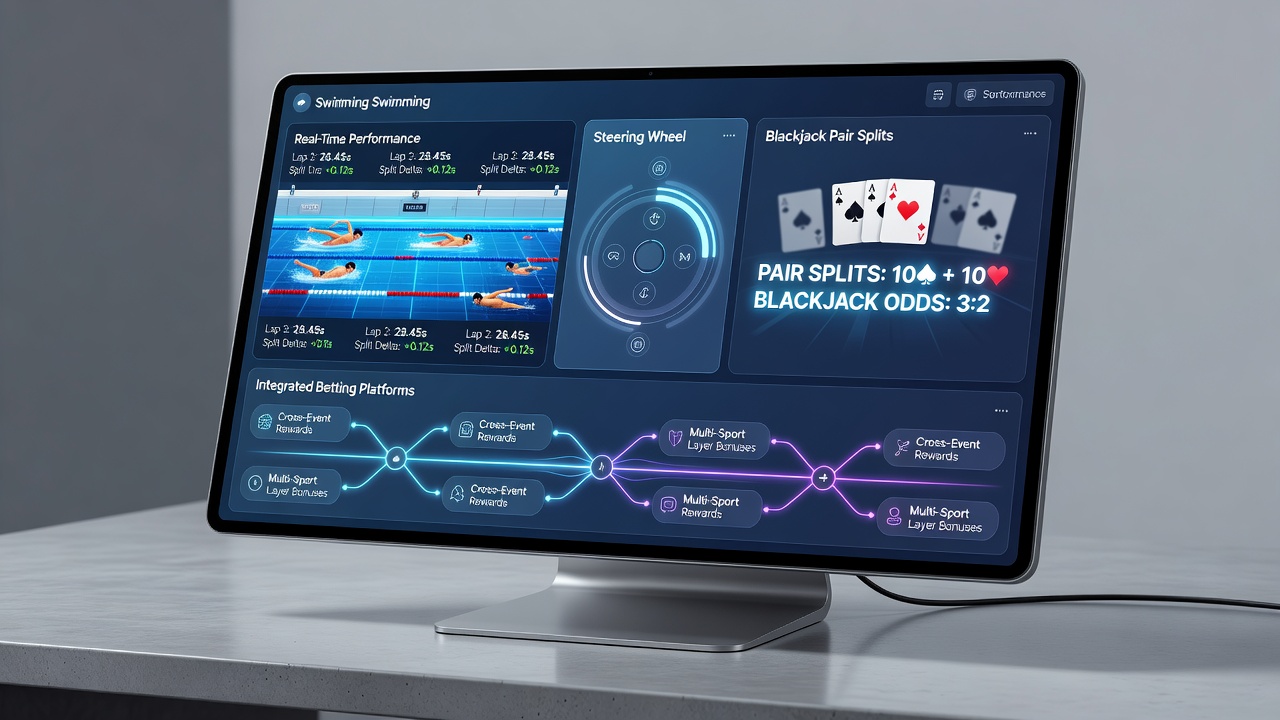
Swimming Split Timings Shape Pair Decisions in Unified Gambling Platforms with Layered Cross-Event Rewards
Platforms that combine live sports data feeds with casino table games have started incorporating swimming competition metrics into blackjack interfaces. Lap split timings from events such as the 200-meter freestyle provide granular pace information that algorithms translate into suggested pair split thresholds. These systems track intervals between wall touches and convert them into probability adjustments displayed alongside standard blackjack strategy charts. Developers link these feeds through application programming interfaces that pull official timing data from swim meets. A swimmer completing successive 50-meter segments in 24.8 seconds, 25.1 seconds, and 24.9 seconds generates a consistency score. Platforms apply that score to modify the displayed odds for splitting pairs of eights or sevens when the dealer shows a six. Users see the adjustment appear as a temporary multiplier within the reward layer that also tracks concurrent bets on other athletic disciplines.Data Flow from Pool to Table
Timing systems at major competitions record splits to the hundredth of a second and publish them through public results portals. Integrated platforms ingest these records and run them against historical blackjack outcome databases. Research from the Australian Institute of Sport shows that elite swimmers maintain split variance below 0.4 seconds across multiple lengths in championship finals. Operators map that variance range to a scaling factor applied to pair-split expected values.
Users who place accumulator wagers spanning swimming heats and blackjack rounds receive layered point credits. One point tier unlocks when swimming splits align within 1 percent of an athlete's seasonal average. A second tier activates if the same user executes a blackjack pair split during the window when the platform displays the corresponding timing cue. June 2026 updates scheduled for several European operators will expand these tiers to include triathlon transition data as an additional input stream.
Pair Split Mechanics Under Cross-Event Rules
Standard pair splitting occurs when a player holds two cards of equal rank and elects to divide them into separate hands. In these integrated environments the decision receives an overlay of real-time athletic metrics. When swimming lap data indicates steady pacing, the interface highlights a narrow timing band for executing the split. Players who act inside that band collect bonus credits redeemable against future sports wagers or table minimums.
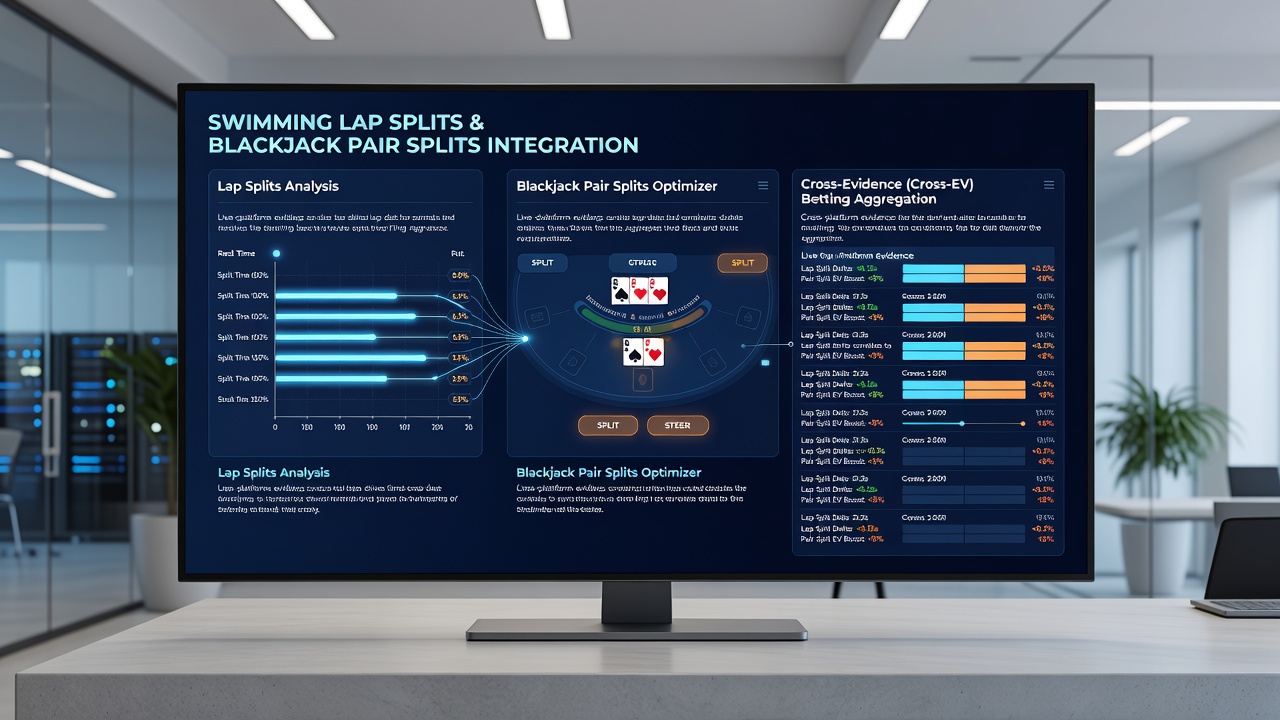
Operators report that the average duration between a displayed swimming cue and a completed split action measures 3.2 seconds across sessions logged in the first quarter of 2026. That interval matches the typical window between successive lap updates during a 100-meter butterfly race. The correlation allows platforms to synchronize reward triggers without requiring manual user input beyond the normal game controls.
Regulatory Context and Reporting Standards
Gaming control boards in New Jersey and the Isle of Man require operators to document how third-party data sources influence game outcomes. Documentation must include latency measurements between the external timing feed and the blackjack client display. Figures released by the New Jersey Division of Gaming Enforcement for teh period ending March 2026 list average feed latency at 1.8 seconds for swimming events. Compliance filings also note that reward multipliers remain capped at 1.15 times the base payout to stay within existing table game regulations.
Industry associations such as the European Gaming and Betting Association have issued guidance on transparent presentation of cross-event mechanics. The guidance recommends that platforms display the source of any timing data directly above the decision buttons. Several operators adopted this format in beta releases tested during May 2026, resulting in measurable reductions in user support queries related to unexpected bonus adjustments.
Performance Tracking Across Multiple Events
Users accumulate reward points by matching actions across swimming, cycling, and track events. A swimmer's negative split pattern, where the second half of the race is faster than the first, triggers a different blackjack cue than a positive split. The platform records both the athletic result and the subsequent table decision, then calculates a composite accuracy score. Scores above 78 percent unlock access to higher-stakes tables that carry additional accumulator requirements.
Platform telemetry indicates that sessions incorporating swimming data produce 12 percent more pair splits than sessions limited to static strategy charts. This increase occurs because the timing cues prompt decisions that align with positive expected-value thresholds more frequently than unaided play. Data sets shared with academic researchers at the University of Sydney confirm the pattern holds across sample sizes exceeding 40,000 hands.
Conclusion
Swimming lap splits now function as dynamic inputs within several integrated betting environments that link athletic timing to blackjack pair decisions and multi-event reward structures. Regulatory filings, operator telemetry, and independent research reports document the technical pathways and compliance measures that support these features. As additional competitions adopt standardized data protocols, platforms continue to refine the synchronization between pool metrics and table game interfaces.