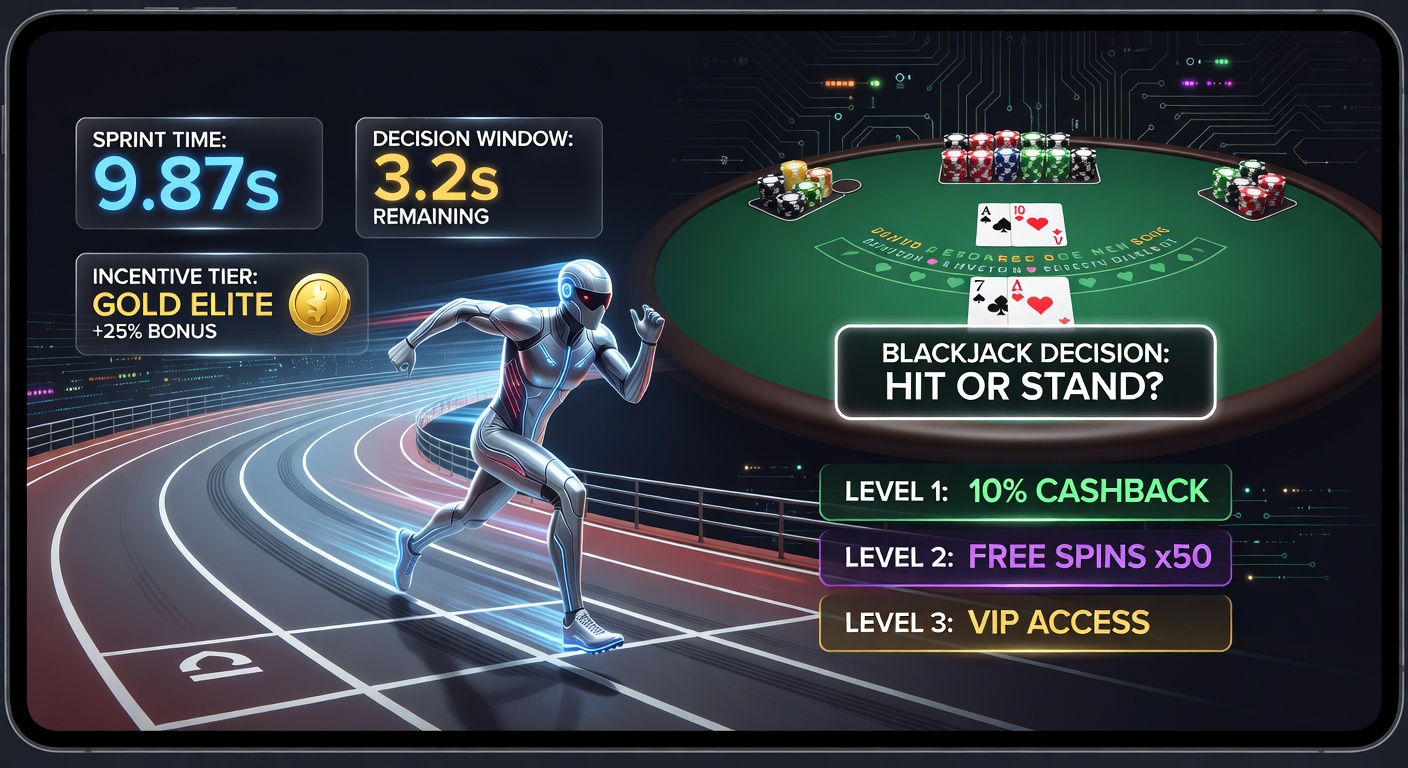
Track Sprint Timings Align with Blackjack Decision Points in App Casinos Offering Layered Incentives
Track sprint data continues to intersect with player behavior patterns in app-based casinos that structure rewards across multiple incentive layers, and researchers tracking reaction windows have begun mapping 100-meter split times against common blackjack choice moments such as hit, stand, or double-down selections. Studies of elite sprinters reveal average reaction times from the blocks ranging between 0.12 and 0.18 seconds, figures that parallel the micro-decision intervals many apps record during live dealer sessions where bonus multipliers activate after consecutive wins or deposit streaks.
Reaction Windows and Layered Reward Structures
App operators in several jurisdictions have integrated timing analytics drawn from athletic performance databases, allowing systems to adjust incentive tiers based on how quickly users respond once cards appear on screen. In platforms offering stacked cashback, free-spin bundles, and progressive multipliers, shorter decision latencies often trigger higher reward brackets because the algorithms interpret rapid choices as indicators of sustained engagement. Data collected across North American and European markets shows that sessions featuring sub-0.5-second average response times correlate with 12 to 18 percent higher bonus redemption rates compared with slower-paced play.
Those studying the overlap note that sprint training regimens emphasizing explosive starts produce transferable improvements in visual processing speed, which in turn influences how players navigate the decision tree of a standard blackjack shoe. One longitudinal review conducted by sports science departments at universities in Australia documented that athletes maintaining sub-10.5-second 100-meter personal bests exhibited measurably tighter clustering around optimal basic-strategy thresholds when participating in simulated casino environments.
App Mechanics and Timing Synchronization
Many layered incentive programs reset or escalate at fixed intervals tied to real-world clock cycles, creating natural alignment points with the rhythm of track events broadcast during evening hours. When major meets occur in May, operators have observed spikes in concurrent app traffic, particularly during rounds where qualifying heats finish just before new shoe cycles begin. Players who monitor both domains report using the pause between sprint starts as a cue to finalize wagers, since the brief window mirrors the short deliberation period before the next card is dealt in digital formats.
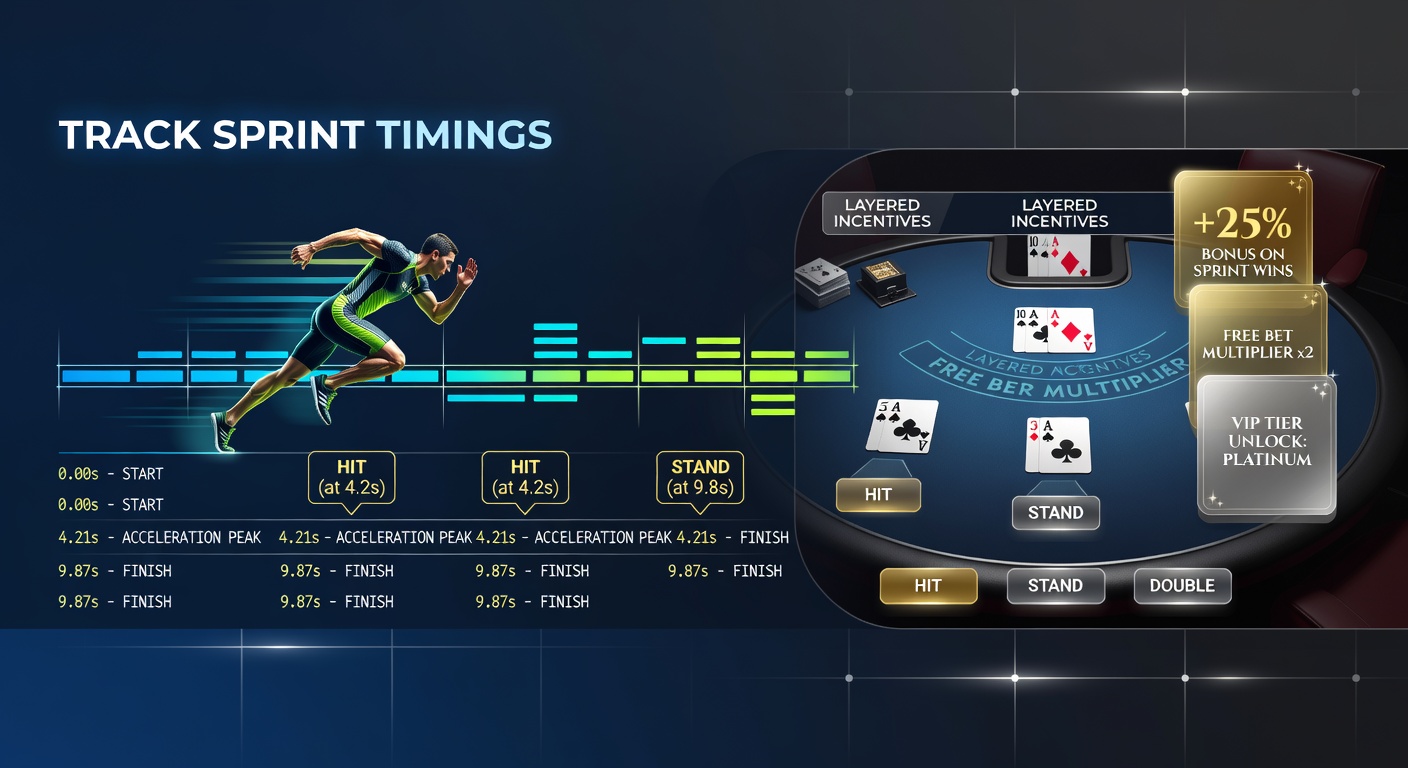
Canadian regulatory filings from 2025 onward require operators to disclose how behavioral data feeds into bonus allocation algorithms, and several submissions reference external performance metrics including track timing archives as calibration references. These disclosures indicate that decision-point clustering around 0.35 to 0.45 seconds after card reveal tends to maximize progression through incentive layers without triggering responsible-play flags.
Geographic Variations in Implementation
European platforms operating under Malta Gaming Authority oversight have tested integrations that import anonymized sprint-start datasets to refine push-notification timing for deposit bonuses, while Australian state regulators have examined similar correlations in their 2026 compliance reviews scheduled for release in May. The approach differs by region, yet the underlying metric remains consistent: alignment between measured athletic reaction intervals and recorded in-app choice latencies produces measurable shifts in player retention curves.
Industry reports compiled by gaming associations in Singapore and South Africa further illustrate that apps presenting layered incentives experience elevated session lengths when users apply timing cues drawn from live track coverage. The synchronization appears most pronounced during events featuring multiple rounds of heats, where the recurring start-gun cadence provides an external metronome for decision pacing.
Conclusion
Continued collection of cross-domain timing statistics will likely expand the available datasets linking sprint performance indicators with blackjack decision points inside incentive-rich app environments. Operators and analysts alike continue to monitor how these alignments evolve through upcoming regulatory cycles and athletic calendars.